Aquatic Plant Study
Mapping plant communities, bathymetry, and the role of flushing flows from Holter Dam to Cascade.
The Challenge
Excessive, heavy aquatic plant growth has become a growing concern on the Upper Missouri River, especially during late summer and fall months. Dense vegetation has made navigation and fishing increasingly difficult for river users.
In 2019, UMOWA engaged Amaruq Environmental Services to conduct a professional analysis of aquatic plant conditions in the river corridor.
Study Summary
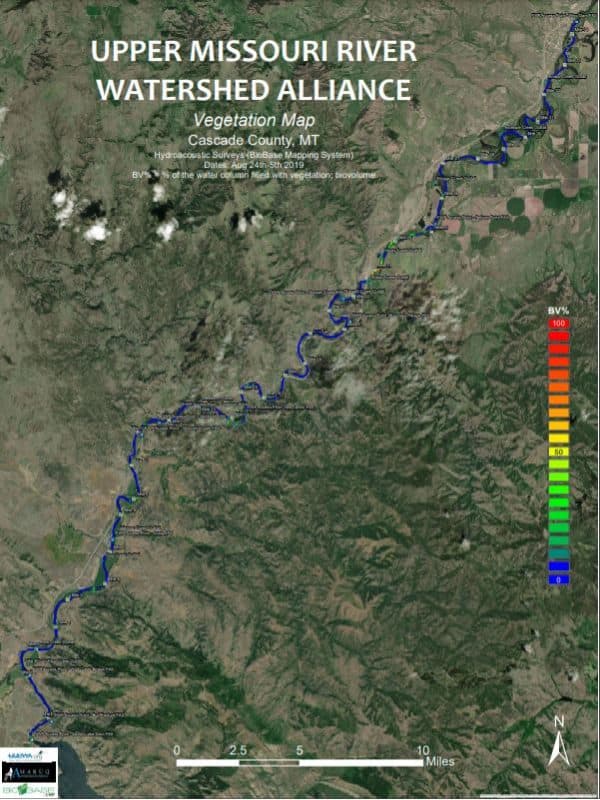
Four side-scanning sonar floats and plant surveys were conducted in May and August over two years. The survey covered 34.5 river miles from Holter Dam to Cascade, providing comprehensive data on aquatic plant distribution and density throughout the study area.
Key Findings
Nine of eleven previously reported submerged and floating aquatic species confirmed; minor populations of invasive curly-leafed pondweed detected.
Aquatic plant diversity remains very low in early spring before higher runoff releases; density and diversity increase as discharges decrease and water temperatures rise.
Nutrient uptake by large submersed vegetation beds noticeably affects nitrogen and phosphorus concentrations.
Sediment transport plays limited roles in new plant establishment; undammed tributaries provide scouring effects reducing densities downstream.
"Moderate flushing flow" operations at Holter Dam show limited impact beyond the first mile.
Peak flows exceeding 11,000 CFS (likely >15,000 CFS) needed to adequately scour established plant populations.
From the Field
Reports & Maps
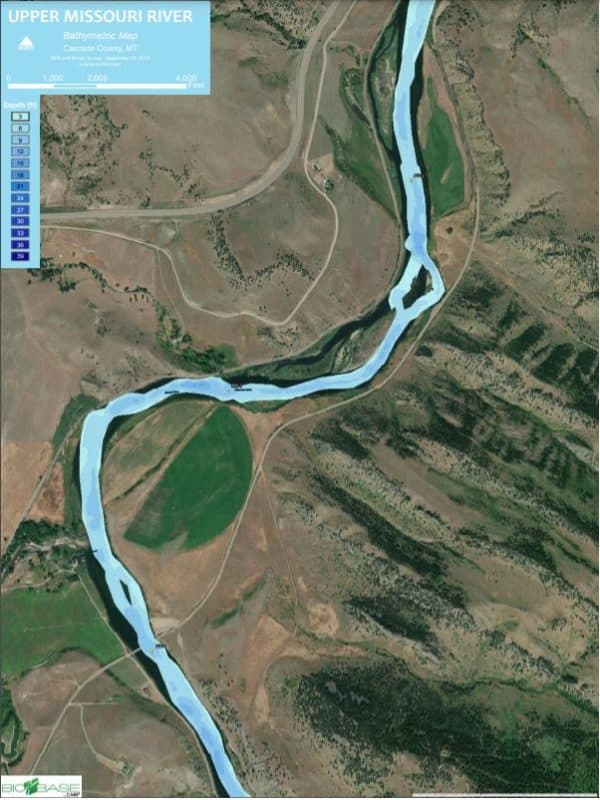
The full aquatic plant study, plus the vegetation and bathymetry maps produced from the sonar surveys.
Explore Scientific Reports
Access detailed scientific reports and data from our aquatic plant studies and other research initiatives.