Macroinvertebrate Studies
A decade of bug-life sampling — the most reliable indicator we have of cold-water river health.
Over a Decade of Scientific Research
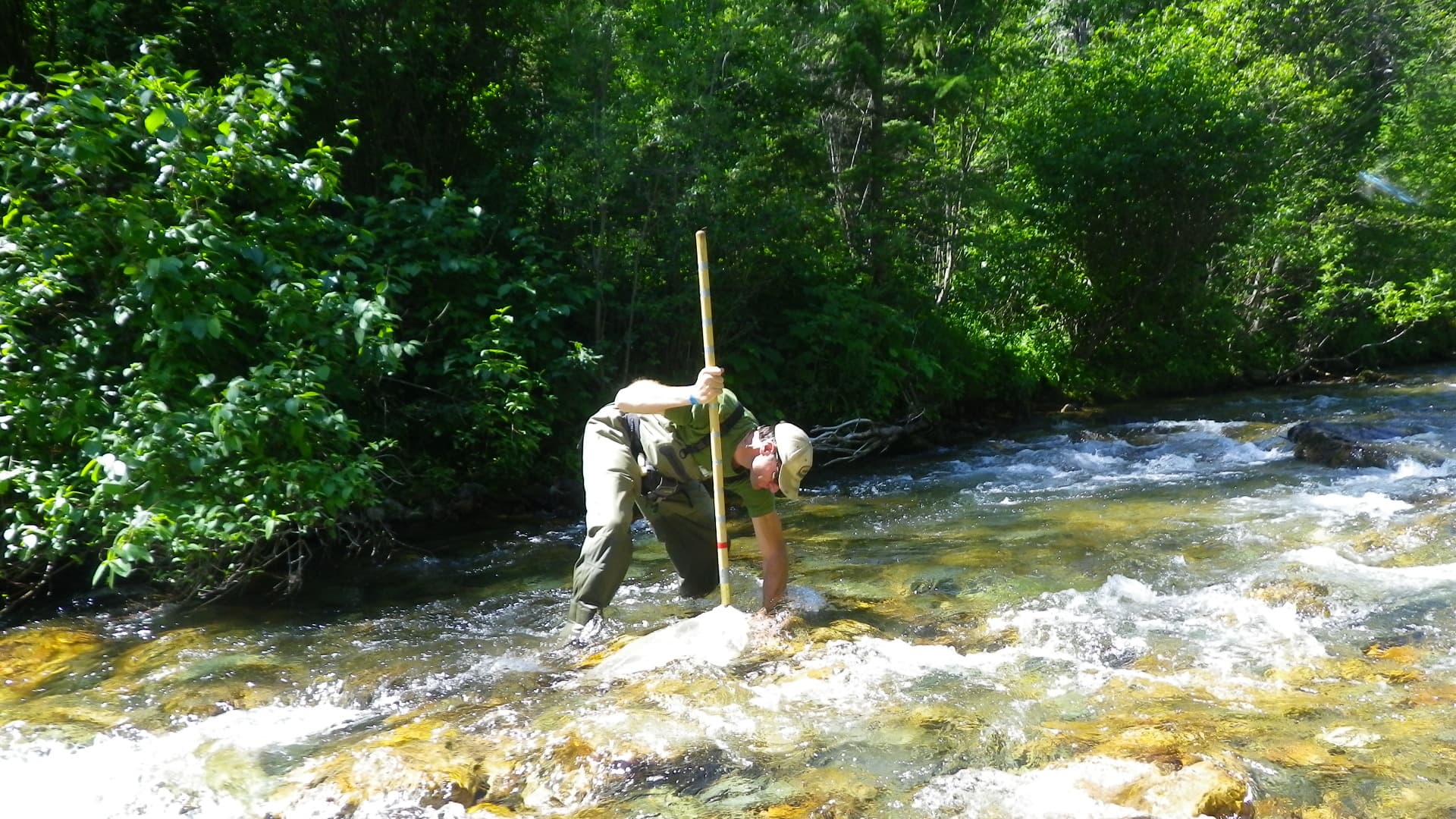
UMOWA has conducted over a decade of scientific investigations (2015–2025) examining the health, diversity, and abundance of macroinvertebrate populations from Holter Dam to Cascade, plus four years of sampling on specific Smith River sites between Fort Logan and Eden Bridge (2016, 2017, 2018, and 2024).
David Stagliano conducted these studies using scientifically rigorous methodology, enabling UMOWA to present findings to state and federal agencies demonstrating the significance of river flushing flows for maintaining healthy aquatic ecosystems.
EPT richness by site
Mayflies, stoneflies, and caddisflies (EPT) are the gold standard for clean cold-water rivers. EPT richness generally rises with distance from Holter Dam — stoneflies, in particular, are largely absent in the upper reach and increase downstream toward the Dearborn and Cascade.
Source: D. Stagliano (Montana Biological Survey), Baseline Macroinvertebrate Monitoring 2015–2018 for the Upper Missouri River (Table 2, “Total EPT per site”). Across the reach, 50 EPT taxa were recorded, averaging 22.3 species per site. Open the full report to see the raw site-by-site data and kick-net methodology.
When the flush fails, the bugs follow
After two consecutive years of weak spring flushing flows (~6,300 cfs), the riffles within 10 miles of Holter Dam shifted back toward non-insects, midges, and New Zealand mudsnails — leaving less habitat for mayflies, stoneflies, and caddisflies.
Source: D. Stagliano, Impact of Flushing Flows “or lack thereof” on Macroinvertebrate Populations in the upper Missouri River (Missouri River Bugs Newsletter 2026), Figure 1. The strong June 2023 flush (~15,000 cfs) flushed sediment from the cobbles and boosted mayfly and caddisfly colonization; the weak flows that followed reversed those gains. Open the newsletter to see the raw %EPT figures.
From the Field
Available Reports
Published scientific reports from our macroinvertebrate research program.
Access Full Reports
Visit our River Data page for downloadable scientific reports and additional research data.